

The Chanel Jacket That Came Back to Life
Key Takeaways
1. Heirloom garments need professional care: not because they are dirty, but because storage itself causes damage over time.
2. Dust, yellowing, deep wrinkles, and fabric degradation are recoverable when treated by experienced hands.
3. Delicate fabrics like bouclé tweed and silk lining require individual stain treatment before any machine process begins.
4. The sooner a stored garment is professionally cleaned, the more fully it can be restored.
5. Some garments carry more than fabric. The people who bring them to us deserve a team that understands that.
Some Garments Are Not Just Garments
There is a kind of garment that sits in a closet not because it is forgotten but because it is too present. Opening the door means seeing it. Seeing it means feeling everything attached to it. So the door stays closed.
We understand this at Happy Cleaners. After 25 years of caring for Brooklyn's most treasured wardrobes, we have learned that the garments people bring to us are not always just clothes. Sometimes they are the last physical thing a person has of someone they loved.
This is one of those stories.
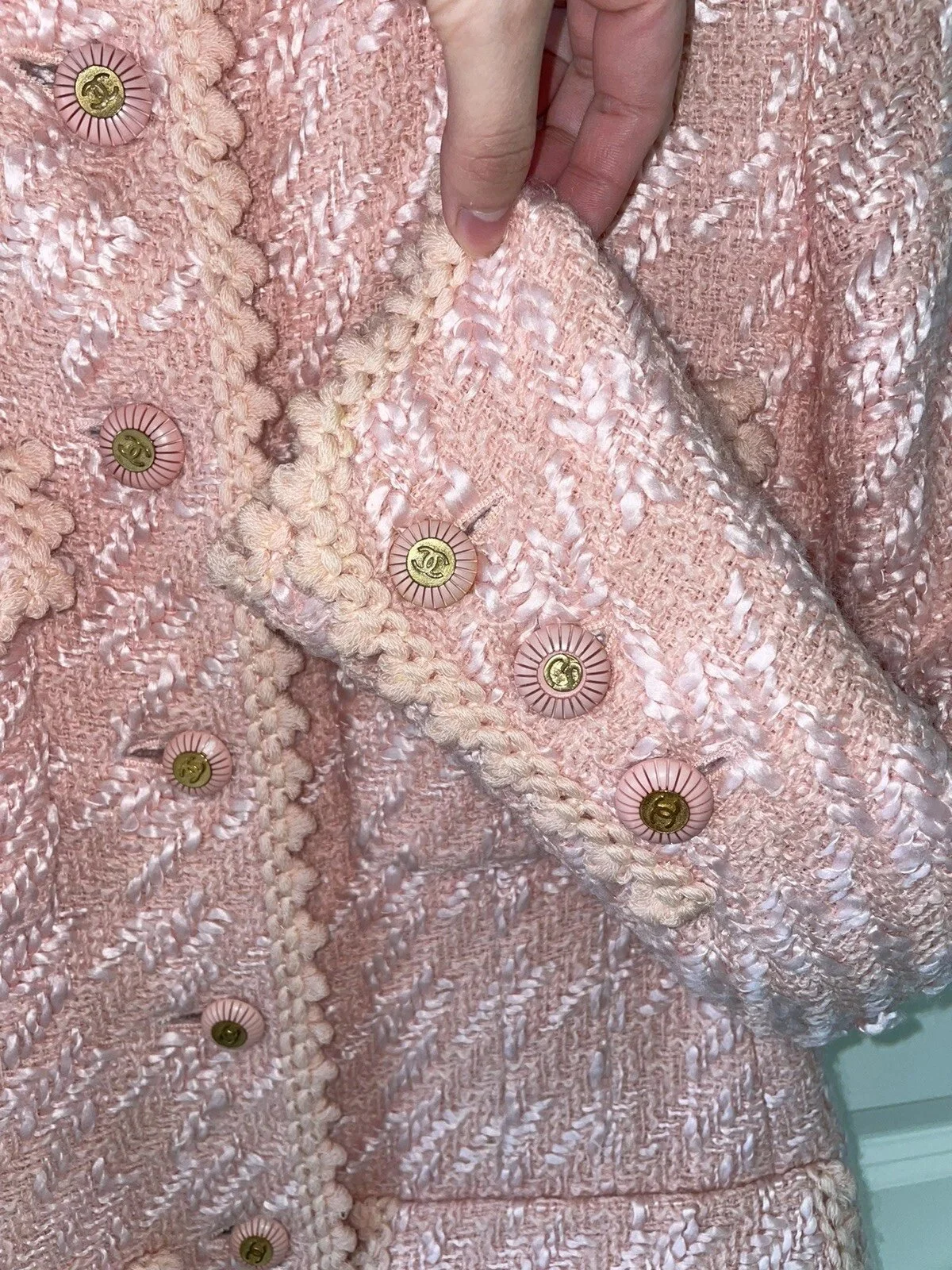
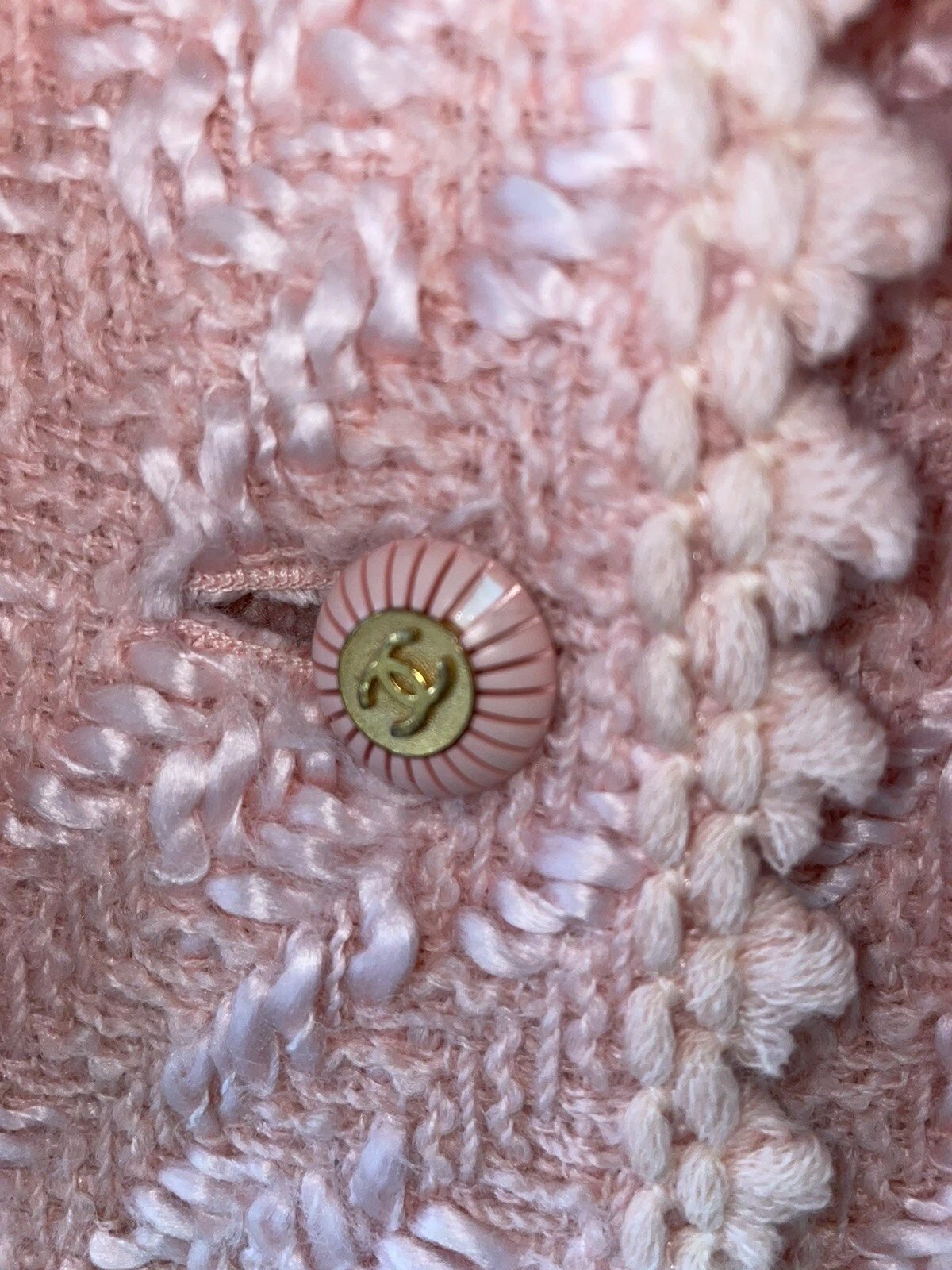
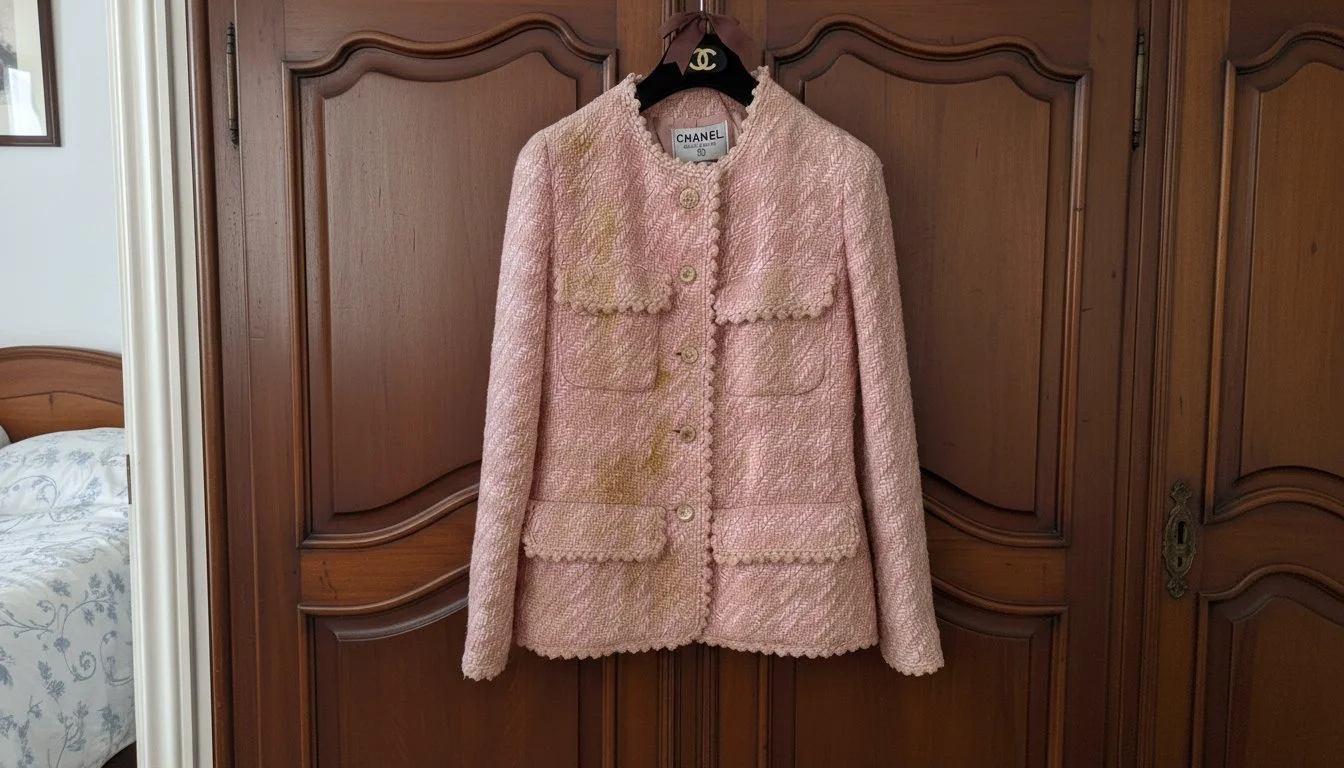
In 2024, a customer sent us a Chanel jacket that had belonged to her mother, who passed away that year. The jacket had been packed inside a closet and left untouched for years. She told us she became emotional every time she looked at it. That was why she kept the closet closed.
But she wanted it back. She wanted to be able to wear it, or at least hold it, without it carrying the weight of neglect on top of grief. She hoped we could rescue what her mother had left behind.
When the jacket arrived at our Carroll Gardens facility, we could see and smell the years immediately.
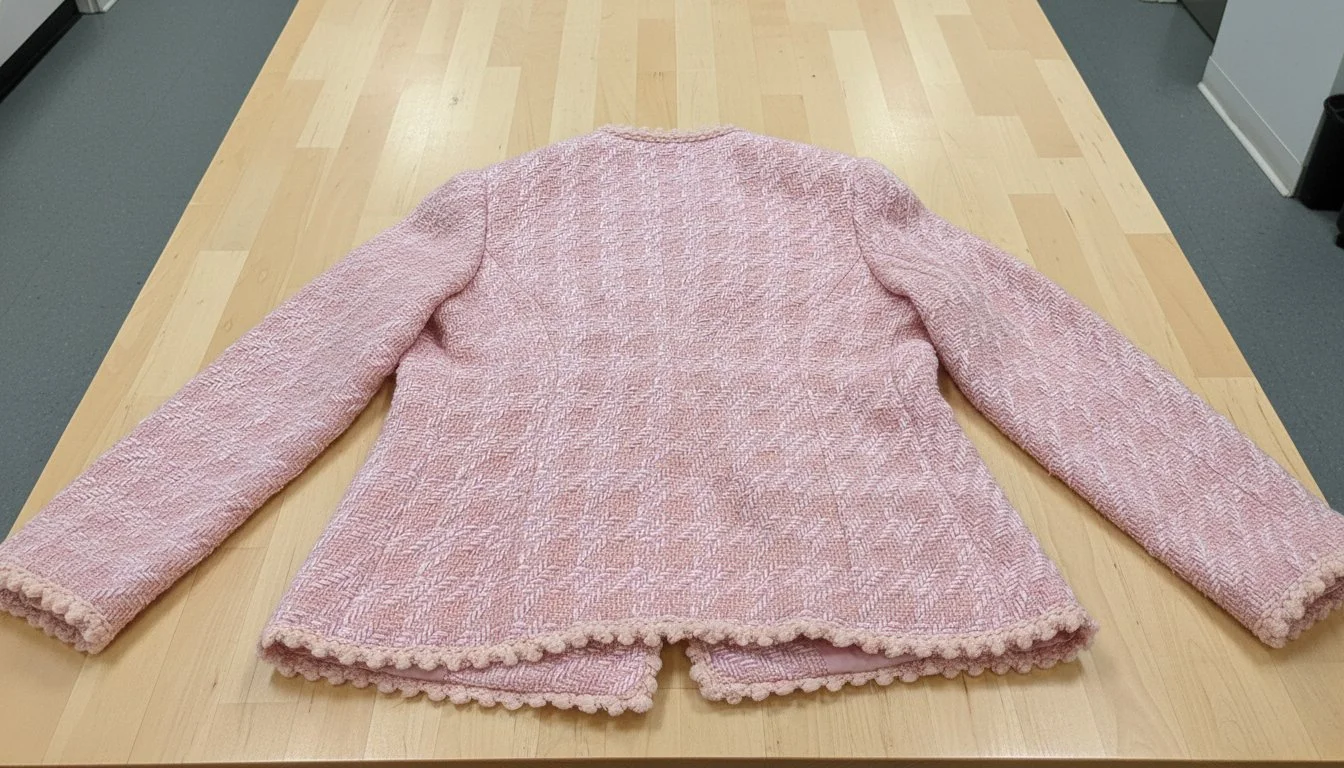
Dust had accumulated on the surface of the shoulders. The body of the jacket had developed deep, set-in wrinkles that disrupted the drape of the fabric entirely. There was discoloration from years of closet storage -- yellowing at the underarms, moisture marks along the lining. The bouclé tweed, which gives a Chanel jacket its unmistakable texture and weight, was fragile in the way that only years of dormancy can make a fabric fragile.
This was not a routine dry cleaning job. This was restoration work.
What We Actually Did
We want to walk you through this honestly, because we think it matters for anyone who has a garment like this sitting somewhere in their home.
Step 1: Full inspection before anything else
Before our team touched a single stain, a specialist mapped the jacket completely. Every fragile element was identified and documented: loose threads in the bouclé, the condition of the silk lining, the hardware on the exterior, and any areas where the fabric structure had weakened with age.
Nothing was treated until we understood exactly what we were working with.
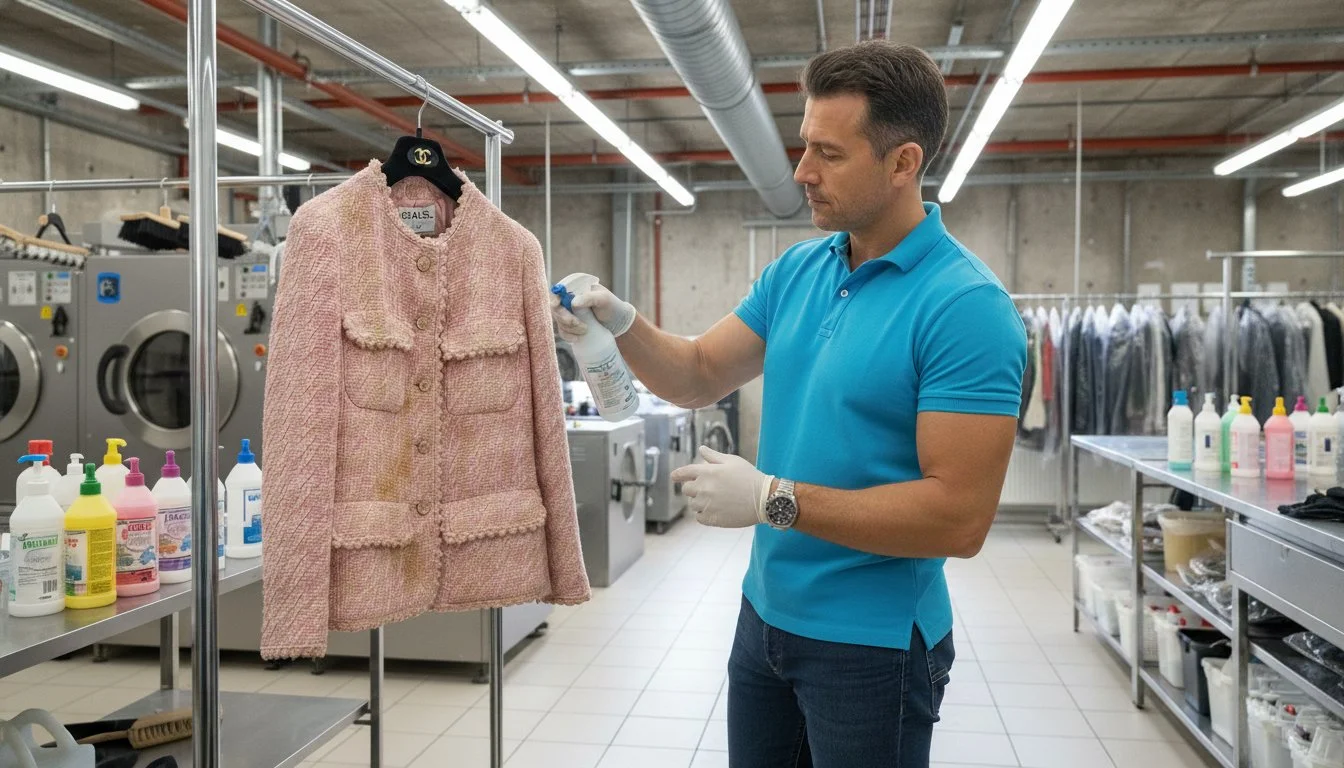
Step 2: Individual stain treatment by hand
Every area of discoloration was treated individually before the jacket went anywhere near a machine. Yellowing at the underarms. Moisture marks along the lining. Each one received targeted treatment applied by hand.
This step matters more than most people realize. Treating stains by hand, rather than relying on machine processing to lift them, means the treatment goes exactly where it needs to go without agitation, without rubbing, and without spreading damage into clean areas of the fabric.
Rubbing bouclé tweed crushes the delicate looped fibers. Once those fibers are damaged by friction, the texture changes permanently. Hand treatment eliminates that risk.
Step 3: Controlled machine cleaning
Once every stain had been pre-treated, the jacket was placed into a highly controlled cleaning machine. The mechanical tumbling action was reduced to an absolute minimum enough to clean the fabric, not enough to cause the bouclé fibers to fuzz, fray, or shrink.
The drying process happened entirely within a closed-loop system using exceptionally low heat. No open-air tumble drying. No exposure to temperature fluctuations that could cause the fabric or lining to contract unevenly.
Step 4: Hand reshaping
When the jacket came out of the machine, it went onto a specialized garment form. A technician steamed it from the inside out, working from underneath the fabric outward and using gentle hand tension to coax the shoulders, lapels, and sleeves back to their original tailored silhouette.
This is the step that most cleaners skip. Machine cleaning removes the dirt. Hand reshaping brings back life. For a Chanel jacket built around precise tailoring and structured drape, this step is not optional. It is the whole point.
Step 5: Final inspection and preservation
A master inspector reviewed the jacket under high-intensity lighting, checking every seam, every treated area, every fold of the lining.
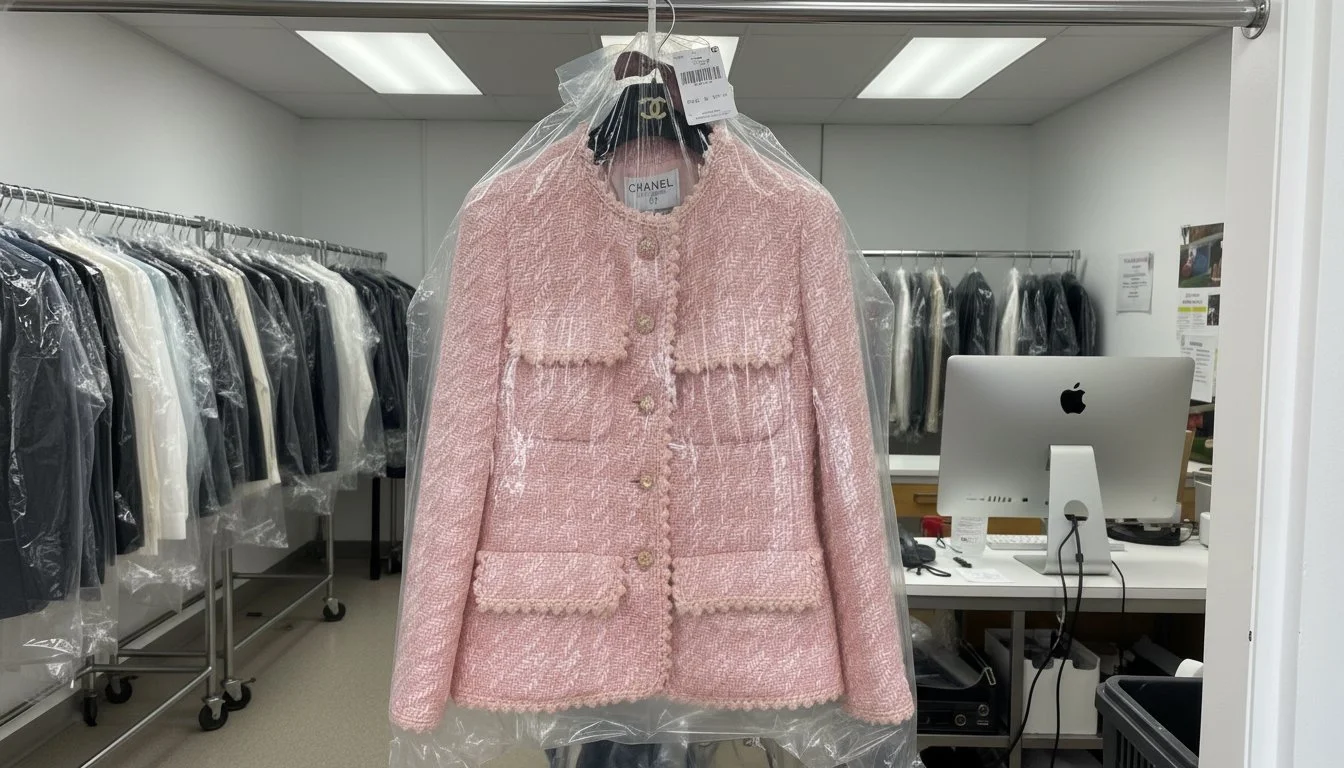
Then it was stuffed with acid-free tissue paper to maintain the shape of the chest and sleeves, hung on a contoured hanger, and prepared for return.
Acid-free tissue matters here because standard tissue paper is mildly acidic over time. For a garment going back into storage, even temporarily, acidic packaging continues the yellowing process that closet storage started. Acid-free tissue stops that process rather than continuing it.
What Came Back to Her
The jacket that came back was not identical to the jacket that left her mother's closet twenty years ago. Time does things to fabric that cannot be fully reversed. But the dust was gone. The deep wrinkles were gone. The discoloration had been significantly reduced. The shoulders sat the way they were cut to sit. The bouclé had its texture back. It looked like the jacket her mother had worn. Not a ghost of it. She told us she cried when she opened it.
If You Have Something Like This
Most people who have a garment like this in their home are waiting for the right moment to deal with it. The truth is that the right moment was earlier than now, because storage damage compounds over time, and the longer a garment sits, the more work it takes to restore it.
But later is still better than never.
If you have a piece that has been sitting in a closet, a parent's coat, a grandmother's dress, a wedding gown still in the bag from the ceremony, bring it to us. We will inspect it honestly, tell you exactly what we can do, and treat it with the same care we gave this jacket.
Some garments deserve to be worn again. We want to help make that possible.
